How I Prep Holiday Meats Ahead of Time
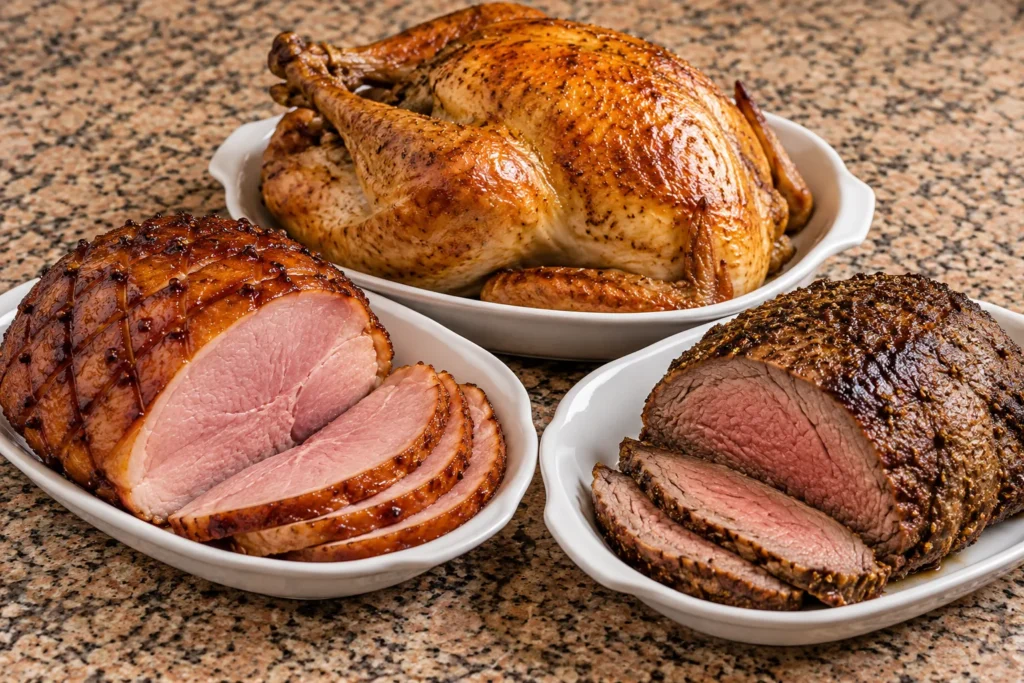
Holiday dinners at my house usually include two main dishes. At Thanksgiving, I make turkey and roast beef. Christmas gets ham and turkey. For Easter, I serve ham and stuffed chicken breasts.
Cooking more than one meat takes some planning, especially when they need different cooking times and share space in the kitchen. That’s why I like to get as much preparation done ahead of time as possible and prep holiday meats ahead of time.
I still cook the meats on the holiday, but I handle jobs like mixing seasoned butter, chopping vegetables, and scoring the ham beforehand. Those steps leave me with less to do when it’s time to start cooking.
Why Our Holiday Table Has Two Main Dishes
My Thanksgiving roast beef tradition started with my dad.
He grew up on a farm, and one of his jobs was cutting the heads off chickens for dinner. That experience stayed with him, and he really didn’t care for poultry as an adult.
When I got married and began hosting family holiday dinners, I started making roast beef alongside the turkey. That way, Dad had a main dish he could enjoy, too. It became part of our Thanksgiving meal. We still carry on that tradition even though it is no longer with us.
I’ve always made both ham and turkey at Christmas. At Easter, I added stuffed chicken breasts when our daughter-in-law joined the family because she doesn’t care for ham.
Having another option lets everyone enjoy the meal. It adds some work, but spreading the preparation out keeps me from trying to do everything on the holiday morning.
Prepare the Turkey the Night Before
I prepare my turkey the evening before the holiday, starting with a fully thawed bird.
First, I mix my preferred seasonings into softened butter. The butter needs to be soft enough to mix and spread easily.
Then I carefully loosen the skin over both breasts. I work the seasoned butter between the skin and the breast meat, spreading it underneath the skin.
Go slowly so you don’t tear the skin. This isn’t a step to rush. Gently lifting a little at a time gives you room to work the butter mixture into place.
Once that’s done, I put the turkey in its roasting pan, cover it with the lid or foil, and refrigerate it overnight.
I also chop the celery, onion, and any other vegetables I plan to put in the cavity of the turkey. I store those in a separate airtight container in the refrigerator. The vegetables stay separate from the raw turkey until morning.
On the holiday, I add the prepared vegetables to the cavity, turn the turkey breast side down as I prefer, and add my cooking liquid. The seasoning and chopping are already finished.
Then I roast it according to the recipe. Use a food thermometer to check that the turkey reaches 165°F in the thickest part of the breast and the innermost parts of the thigh and wing, avoiding bone.
Score and Prepare the Ham Ahead
For my ham, I mix brown sugar, softened butter, and other ingredients together the night before.
I score the top of the ham diagonally in one direction, then diagonally in the other direction to make a diamond pattern. Next, I spread the butter mixture over the top.
Once the ham is in its baking pan or dish, I cover it with foil and put it in the refrigerator overnight.
The next morning, I add a small amount of my preferred liquid to the bottom of the pan. Then it’s ready for the oven.
Follow the cooking directions for the ham you purchased. A fully cooked ham and a ham that needs cooking require different handling, so check the label before planning your oven time.
Getting the ham ready ahead means I don’t have to mix the topping or score the meat while I’m also getting the turkey started.
Get the Roast Beef Ingredients Ready
My Thanksgiving roast beef cooks in the slow cooker. That gives me another main dish without taking up more oven space.
I put baby carrots and unpeeled, but thoroughly washed baby potatoes (also called new potatoes) on the bottom of the crock, then set the roast on top. I season the meat with my preferred seasonings and scatter large pieces of chopped onion over it.
Once everything is in place, I pour a jar of homestyle brown gravy over the top.
I’ve assembled the filled crock the night before, covered it, and refrigerated it overnight. Check your slow cooker’s instructions before doing this. Some manufacturers allow it, but a cold crock and cold ingredients can change how long the cooker takes to heat.
Never place refrigerated stoneware into a preheated heating base. If your model doesn’t allow refrigerating the filled crock, prepare and refrigerate the meat and vegetables separately, then assemble them in the morning.
Having the ingredients ready still saves time. Follow your recipe and the appliance instructions for the size of roast and cooking time.
Prepare for Easter Stuffed Chicken Breasts
Stuffed chicken breasts give our daughter-in-law an alternative to the Easter ham. They also give anyone else at the table another choice.
To prepare ahead, handle the chicken and filling separately and keep them refrigerated. Stuff the raw chicken breasts just before baking, rather than storing them already stuffed for a day or two.
This leaves some assembly for Easter morning, but you can still have the ingredients measured and the preparation organized beforehand.
When baking, check both the chicken and the center of the filling with a food thermometer. Both need to reach 165°F.
Plan the Cooking Before the Holiday Starts
Before the holiday morning, write down each meat’s cooking temperature, estimated cooking time, and resting time. Work backward from when you want to serve dinner.
Think about oven space, too. Make sure the roasting pans fit together if the turkey and ham will cook at the same time. Keep the slow cooker’s location in mind so you have room to work.
To prep holiday meats ahead of time doesn’t mean every job disappears. It means the butter is mixed, the vegetables are chopped, and the ham is ready in its pan. For me, having those steps finished makes cooking several holiday meats much more manageable.